Top Furnace Problems That Cause Winter Breakdowns: Stay Warm
Top Furnace Problems That Cause Winter Breakdowns: Stay Warm
Stay warm this winter by learning about common furnace problems that lead to breakdowns. Preventative maintenance tips can help you avoid heating issues.
Top Furnace Problems to Watch for to Prevent Winter Breakdowns and Stay Warm
Winter places extra demand on home heating systems, and recognizing the most common furnace problems early helps prevent inconvenient breakdowns, efficiency losses, and safety risks. This guide explains the causes, mechanisms, and immediate actions for frequent winter furnace issues so homeowners can diagnose symptoms, apply safe DIY checks, and know exactly when to call a professional technician. You will learn the top failure categories—airflow and filters, ignition and pilot systems, thermostat and controls, short cycling, mechanical failures, and heat exchanger/carbon monoxide risks—plus step-by-step troubleshooting and a clear winter maintenance checklist. Practical lists and diagnostic tables help match observable signs to likely causes and next steps, while safety-focused sections cover detection and emergency response for carbon monoxide concerns. Finally, the article outlines preventative maintenance tasks that reduce winter breakdown risk and explains local professional service options available to West Haven, UT homeowners. Read on for actionable checks you can do today and the red flags that require prompt professional attention.
Top Furnace Problems: Airflow, Ignition, Thermostat, Short Cycling, Mechanical Failures, and Carbon Monoxide Risks
The top failure categories—airflow and filters, ignition and pilot systems, thermostat and controls, short cycling, mechanical failures, and heat exchanger/carbon monoxide risks—plus step-by-step troubleshooting and a clear winter maintenance checklis
Carbon Monoxide
What Are the Most Common Furnace Problems Causing Winter Breakdowns?
A furnace commonly fails in winter due to restricted airflow, ignition or pilot light failures, thermostat malfunctions, blower motor problems, short cycling, and heat exchanger damage. Restricted airflow from dirty filters reduces heat transfer and forces the blower and burners to work harder, which accelerates wear and raises the chance of burner or ignition faults under sustained cold-weather load. Thermostats and control issues cause incorrect cycling and no-heat conditions, while mechanical parts such as the blower or limit switch can fail under heavy use; heat exchanger cracks are a safety-critical malfunction that can lead to carbon monoxide release. Understanding these root causes makes it easier to prioritize DIY checks and safe escalation to a professional technician. The next subsections detail how filters degrade performance and what to check if your furnace is not producing enough heat.
Common winter furnace causes to watch for:
• Dirty or clogged air filters reducing airflow and causing overheating.
• Ignition or pilot light failures preventing burners from lighting consistently.
• Thermostat errors or wiring issues causing incorrect on/off cycling.
• Short cycling caused by airflow restriction, oversized equipment, or controls.
• Cracked heat exchanger or combustion problems leading to safety risks.
This quick list summarizes the primary failure modes and prepares you to match symptoms to likely causes before reviewing the diagnostic table below.
The table below helps you compare symptoms with likely causes and immediate actions to take.
• Reduced airflow or weak heat — Likely Cause: Dirty furnace filter or blocked vents — Immediate DIY Action: Check and replace filter, open vents — When to Call a Pro: If airflow doesn't improve after filter change
• No heat or intermittent heat — Likely Cause: Pilot/ignition failure or gas supply issue — Immediate DIY Action: Verify thermostat settings, check pilot per manual — When to Call a Pro: If gas smell, repeated ignition failures, or lockouts
• Thermostat not responding — Likely Cause: Dead batteries, wiring, calibration — Immediate DIY Action: Replace batteries, check settings, reset — When to Call a Pro: If wiring issue or persistent calibration error
• Rapid on/off cycles (short cycling) — Likely Cause: Dirty filter, faulty thermostat, oversized unit — Immediate DIY Action: Replace filter, check thermostat placement — When to Call a Pro: If cycles persist after basic fixes
• Soot, yellow flame, or CO alarm — Likely Cause: Combustion problem, cracked heat exchanger — Immediate DIY Action: Evacuate and ventilate, do not use furnace — When to Call a Pro: Immediate emergency call and professional inspection
This comparison clarifies how early DIY steps can resolve common issues and which signs require expert intervention to maintain safety and reliability.
How Do Dirty Furnace Filters Affect Heating Performance?
A furnace filter traps dust and particulates to protect blower components and maintain airflow; when it clogs, airflow drops and the furnace must run longer to reach set temperatures. Reduced airflow causes heat to build up inside the heat exchanger and may trip safety limits, which leads to frequent shutdowns and increased short cycling. Clogged filters also reduce efficiency, raise energy bills, and accelerate wear on the blower motor because the fan runs against greater resistance. Replace or inspect filters regularly based on MERV rating and household conditions—higher MERV filters capture finer particles but may need more frequent checks to avoid restriction. The next section explains how insufficient heat output can arise from filters and other causes so you can follow a diagnostic checklist.
Why Does My Furnace Fail to Heat Properly in Winter?
Insufficient heat often stems from dirty filters, incorrect thermostat settings, ignition failures, blocked vents, or failing burners and heat exchanger issues that reduce combustion efficiency. Start with basic checks: confirm thermostat setpoint, verify filter condition, ensure vents are open, and listen for ignition attempts or unusual burner noise; these quick steps resolve many common issues. If the thermostat calls for heat but the burners do not ignite, the problem may be ignition-related or a fault in control circuits requiring a technician's diagnostic tools. Persistent low heat despite visible burner operation suggests burner adjustment, fuel pressure, or heat exchanger inefficiency, which need professional inspection. After these diagnostic checks, learn safe ignition troubleshooting and pilot-light guidance to decide whether to continue DIY or schedule service.
How Can You Troubleshoot Furnace Ignition and Pilot Light Problems?
Ignition systems fall into two broad types—standing pilot and electronic ignition—and failures in either prevent burners from lighting or cause intermittent flame loss. A standing pilot uses a small constantly burning flame to ignite burners when the thermostat calls; if the pilot is out, checking the pilot assembly and following the manufacturer's relight sequence is a safe first step. Electronic ignition systems rely on an igniter or hot surface that must receive power and proper control signals; troubleshooting starts with checking power, fuses, and control resets before touching electrical components. Always prioritize safety: shut off gas if you smell it, avoid DIY attempts if you are unsure, and move to professional help for persistent or hazardous conditions. The following H3 sections list observable signs of ignition failure and provide triage guidance on when to call a technician.
What Are the Signs of a Pilot Light or Ignition Failure?
Common signs of ignition or pilot issues include no heat when the thermostat calls, repeated clicking without flame, furnace lockouts, unusual smells like rotten eggs indicating gas, and visible flame abnormalities such as yellow or lifting flames. You can safely confirm a standing pilot by visually checking the pilot assembly per your furnace manual and noting whether the pilot is stable and blue; for electronic igniters, listen for the ignition sequence and observe any repeated attempts or lockouts. A gas odor combined with ignition failure is a critical safety flag—evacuate the home and notify emergency services rather than attempting further DIY troubleshooting. If ignition symptoms are limited to a blown fuse, tripped breaker, or simple reset condition, a careful homeowner check is reasonable; otherwise, plan for a professional inspection.
When Should You Call a Professional for Ignition Repairs?
Safe DIY ignition steps include resetting the furnace control per the owner's manual, checking and replacing a blown furnace fuse, ensuring the power switch and circuit breaker are on, and visually confirming a standing pilot per instructions. Professional-only conditions include any persistent ignition lockout, the presence of a gas smell, visible flame instability (yellow or lifting flame), repeated pilot failures, faulty gas valve operation, or if electrical wiring or igniter replacement is required. Technicians have combustion analyzers, gas-pressure gauges, and certified safety protocols to handle gas-related controls and to rule out heat exchanger compromise—equipment and skills beyond typical homeowner toolkits. If you observe safety flags or cannot restore reliable ignition after the basic DIY steps, schedule a professional inspection promptly to prevent prolonged no-heat conditions and safety hazards.
Why Is My Furnace Short Cycling and How Does It Affect Efficiency?
Short cycling is when a furnace turns on and off frequently in short intervals, typically under 5–10 minutes per cycle, and this behavior reduces efficiency, raises utility costs, and accelerates wear on components like the blower motor and ignition system. The primary causes of short cycling are restricted airflow (often from dirty filters or closed vents), an oversized furnace that heats the space too quickly, thermostat placement or malfunction, and failing control or limit switches reacting to overheating. Short cycling wastes fuel because each start uses additional energy for ignition and blower spin-up, and repeated thermal stress shortens component life and increases the likelihood of breakdowns during peak cold periods. Preventative measures focus on restoring correct airflow, calibrating or relocating thermostats, proper equipment sizing at replacement, and routine maintenance to detect early control or pressure switch issues. The next subsections break down main causes and explain how preventative maintenance interrupts the short-cycle feedback loop.
What Are the Warning Signs of a Cracked Heat Exchanger and Carbon Monoxide Risks?
A cracked heat exchanger is one of the most dangerous furnace problems because it can allow combustion gases, including carbon monoxide (CO), to enter the living space; early warning signs include soot or staining on furnace components, persistent rust, unusually yellow or lifting flames, higher-than-normal condensation, and occupants experiencing headaches, nausea, or dizziness. Carbon monoxide is colorless and odorless, so functioning CO detectors placed according to manufacturer guidance are the primary early-warning device; however, detectors do not replace professional combustion analysis, which is required to confirm leakage or a cracked heat exchanger. Any suspicion of heat exchanger damage demands immediate cessation of furnace use, evacuation if CO alarms sound or occupants feel ill, and an urgent professional inspection with combustion analyzers and pressure tests. The next subsections cover how to detect a cracked heat exchanger before it causes harm and the exact emergency steps to take when CO is suspected.
The table below prioritizes safety-critical issues, detection methods, and urgency levels to guide homeowner response.
• Cracked heat exchanger — Health / Safety Risk: Carbon monoxide exposure, poisoning — Detection Method: CO detector alarm, soot, flame discoloration, professional combustion test — Urgency Level: Emergency — immediate shutdown and inspection
• High CO readings — Health / Safety Risk: Acute or chronic CO poisoning — Detection Method: CO detector readings, occupant symptoms — Urgency Level: Emergency — evacuate and call emergency services
• Yellow or lifting flame — Health / Safety Risk: Incomplete combustion, CO risk — Detection Method: Visual flame inspection, soot buildup — Urgency Level: High — schedule inspection same day
• Soot or rust on furnace — Health / Safety Risk: Degraded combustion components — Detection Method: Visual inspection during maintenance — Urgency Level: Moderate — prompt service recommended
How to Detect a Cracked Heat Exchanger Before It Causes Harm?
Detecting a cracked heat exchanger early uses a combination of observation and device-based checks: install and regularly test CO detectors in living areas and near sleeping spaces, visually inspect the burner chamber for soot, rust, or hairline fractures if accessible, and note chronic occupant symptoms such as headaches or dizziness that improve when away from home. However, definitive detection requires a certified technician using a combustion analyzer, pressure testing, and visual inspection under operational conditions because some cracks only open under thermal stress. Place CO detectors per manufacturer recommendations and replace batteries or units according to established intervals; detectors provide critical first-alert capability but are not a substitute for annual professional combustion testing. If you notice visual signs or detector alerts, the next section explains immediate safety steps and professional follow-up.
How Does Regular Winter Furnace Maintenance Prevent Breakdowns?
Regular winter maintenance prevents breakdowns by addressing the common failure modes—restoring airflow, verifying ignition reliability, calibrating controls, and checking combustion integrity—before they cause system failure under heavy winter loads. A professional tune-up typically includes filter inspection and replacement, burner cleaning and adjustment, flame sensor cleaning, blower motor lubrication and belt inspection, thermostat calibration, safety control testing, and a combustion analysis to confirm safe operation; these tasks reduce the likelihood of short cycling, ignition failures, and heat exchanger stress. Preventative maintenance improves efficiency, lowers energy bills, extends equipment life, and provides documented service history that helps technicians identify emerging issues faster. The following checklist and table show specific maintenance tasks, recommended frequency, benefits, and estimated cost ranges to help homeowners plan seasonal service.
• Replace or inspect air filter to maintain proper airflow and efficiency.
• Clean burners and flame sensor to ensure reliable ignition and combustion.
• Inspect blower motor and belts to prevent mechanical failures.
• Perform combustion analysis and inspect the heat exchanger for safety.
This checklist summarizes core tune-up items that directly prevent winter breakdowns and improve safety.
The table below breaks down maintenance tasks into frequency, benefit, and estimated cost range to clarify the value proposition of preventive service.
• Air filter replacement — Frequency: Every 1–3 months (seasonal) — Benefit: Restores airflow, reduces short cycling — Estimated Cost Range: Low — DIY filter cost
• Burner and flame sensor cleaning — Frequency: Annually (pre-winter) — Benefit: Improves ignition reliability and efficiency — Estimated Cost Range: Moderate — professional service
• Blower motor inspection & lubrication — Frequency: Annually — Benefit: Prevents mechanical failure and maintains airflow — Estimated Cost Range: Moderate — included in tune-up
How Can Luna Heating and Air Conditioning LLC. Help with Heating Repair and Maintenance in West Haven, UT?
Luna Heating and Air Conditioning LLC. provides local homeowners and businesses in West Haven, UT area with heating repair, replacement, and preventative maintenance services performed by NATE-certified technicians. Their family-owned approach emphasizes energy efficiency, customer satisfaction, and service across major makes and models, including brands such as Daikin and Goodman, and they offer free estimates to help homeowners plan repairs or tune-ups without surprise costs. A professional winter inspection from their team includes the same core tune-up tasks described above—filter checks, burner cleaning, combustion testing, thermostat calibration, and safety control verification—so homeowners can reduce the likelihood of winter breakdowns. If you notice any of the red-flag symptoms described earlier, scheduling a prompt inspection with a certified technician ensures safety and restores reliable heating before the coldest weather arrives.
For homeowners weighing DIY checks versus professional service, Luna's technicians handle safety-critical diagnostics like combustion analysis and heat exchanger inspection, while advising on filter choices, thermostat upgrades, and maintenance plans tailored to local climate demands.
Conclusion
If you notice reduced airflow, repeated ignition failures, unexplained short cycling, or any signs of combustion problems or carbon monoxide alarm activation, arrange a professional inspection to protect your home and household. Luna Heating and Air Conditioning LLC. offers NATE-certified heating repair and maintenance for West Haven, UT residents, services major brands including Daikin and Goodman, and provides free estimates to help prioritize the safest and most cost-effective remedies. Scheduling a winter tune-up or emergency repair with a certified technician ensures accurate combustion testing, reliable ignition service, and clear recommendations for repair or replacement—preventing breakdowns and preserving comfort throughout the season. Contact the local provider to book an inspection, request a free estimate, or arrange emergency service so you can stay warm and safe this winter.
Thank you! Your submission has been received!
Oops! Something went wrong while submitting the form.
Our customers commend our outstanding service and competitive pricing, valuing the personalized attention and expert advice that make us their preferred HVAC provider.
AC failed this past spring. I received 5 bids from big comany’s to small local companies. I decided to go with Luna because of their price and support. For the money I felt Luna gave me the best equipment. Jamie was awesome. He came to my home and answered all my questions then gave me several options to choose from. The install went exactly as planned with no extra cost. Thank you Luna.
Jay M.
Absolutely amazing company! Very polite. I needed help in the middle of the winter with a furnace issue and they quickly fixed my heat so I asked for a bid for a complete replacement. They did a complete replacement in one day and I couldn’t be happier.I highly recommend anyone in need of any heating and air conditioning problems to call them.
Keith J.
I've had many interactions with Jaime, and they are all positive. Each time he was at my home within a couple of hours or less. Very knowledgeable, very pleasant and personable and a huge bonus that he offers a discount for military veterans. I would never hesitate to call again in a time of need. He's so reliable in a world of no shows in business. I highly recommend his company for any of your HVAC needs
Misti C.
Fast, honest, and trustworthy. Jaime was fantastic to work with. He gave us great feedback and was the best price of the 3 companies we got quotes from. I got his number from a neighbor who also had a great experience with him and recommended him highly to me.
Wendy T.
We're super happy with Jaime's work. He is honest and straightforward, does a good job, and gets there significantly faster than the big chain businesses do. We'll keep going back to him for tune-ups and any other needs in the future.
Heather W.
Needed furnace blower motor replaced next day service. Jaime and his son took care of issue quickly and efficiently. Would definitely recommend will use again and again. Had water heater and ac capacitor replaced in past. Same great service and prices
David S.
Jaime was great to work with and did a fantastic job installing our heater and air conditioning. He is responsive and helpful, all for an unbeatable price. The installation is clean and professional, and our unit has worked great through some cold nights
Daniel H.
My system came with a ten year parts and labor warranty. I had an issue with my new system condensation tune leaking. Luna Heating and Air came out ASAP and took care of the problem. Excellent customer service. Will always recommend.
John S.
Jaime is fantastic. I built a second home and had him do the HVAC work. Since then I've had him do some other repairs on my primary home . Great sense of humor. Professional, fair and very responsive. Highly recommend him.
Todd B.
Jaime did the entire HVAC system on my new home. He did a great job and came in at a great price. He is very responsive and easy to work with. I would reccomend him anyday.
Bradley D.
As a consumer, I feel like I have to choose between a price OR quality work. Luna does BOTH - quality and at a fair price. My experience is that that is so rare - I had to provide feedback of excellent service 5 stars and will always recommend and call Luna for future services.
Get flexible financing for your Luna Heating & Air upgrade with Optimus. Apply today and see how easy and affordable it is to bring year-round comfort to your home.
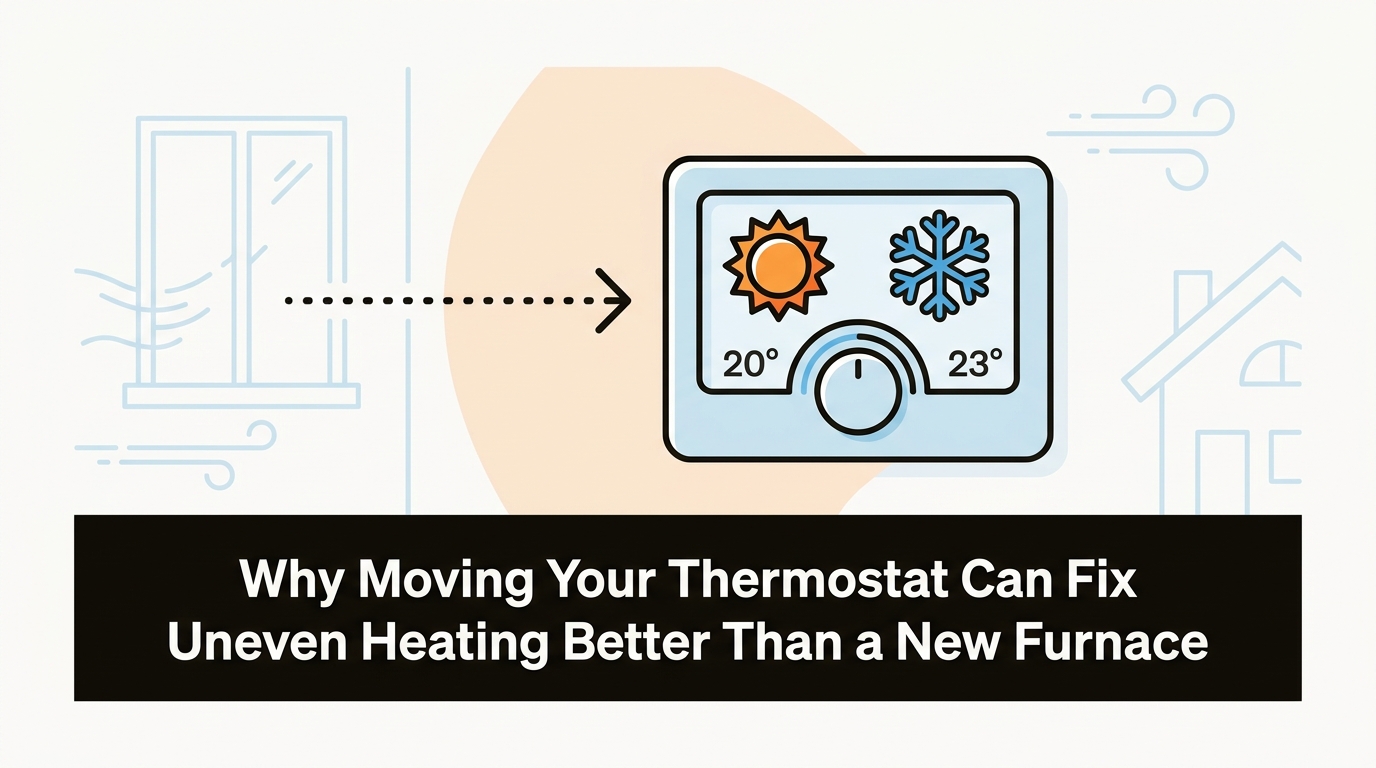
Before you assume your furnace is failing this fall, check your thermostat's location. A sensor trapped in a hot kitchen will shut off your heat prematurely, causing severe cold spots.
AC Service in Kaysville, UTKeeping your air conditioning running reliably in Kaysville, UT is essential for comfort, energy savings, and indoor air quality. Summer days in Davis County can be…


.avif)




.jpeg)