5 min read
Common Homeowner Questions Answered: Why Your Furnace Smells Like Burning Dust
Why does your heater smell like burning dust? Get common homeowner questions answered to see if it's normal or a hazard. Decide with confidence.

.avif)
Before you assume your furnace is failing this fall, check your thermostat's location. A sensor trapped in a hot kitchen will shut off your heat prematurely, causing severe cold spots.
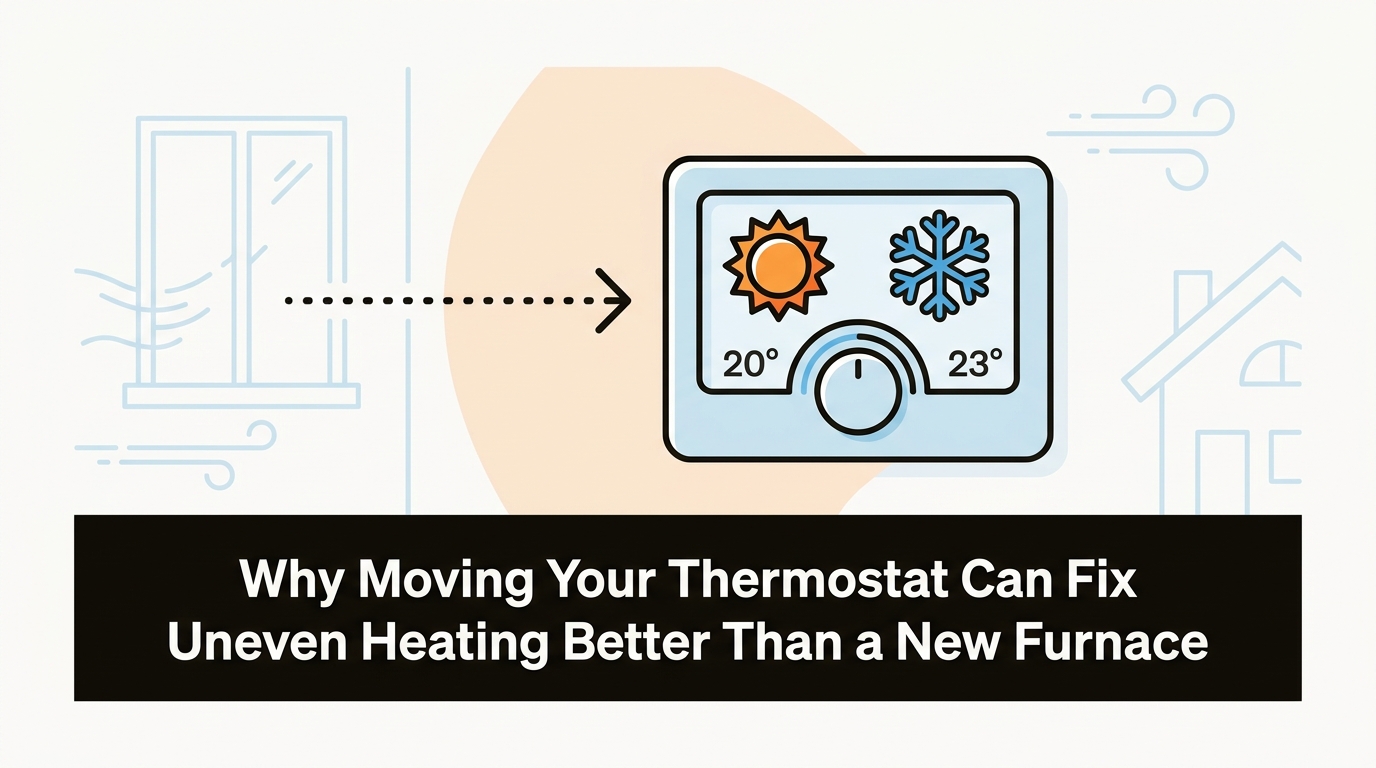
If your back bedrooms feel like an icebox while the rest of the house is warm, you might be wondering why moving your thermostat can fix uneven heating better than a new furnace. As the early fall pre-heating season begins and temperatures drop across West Haven UT, this frustrating scenario plays out in countless homes. You turn up the heat, hoping to warm the cold spots, only to find the rest of the house turning into a sauna. It is a common pattern that immediately triggers homeowner panic. Most people assume their heating equipment is failing, leading to stressful thoughts about massive replacement projects and days without heat.
However, the true culprit is often hiding in plain sight: a thermostat located in a hot kitchen or sunny hallway that shuts the system down prematurely. The answer to this imbalance lies in exactly how your system measures comfort. Before you start researching new furnace heating systems, it pays to schedule professional HVAC repair in West Haven to rule out a simple sensor issue.
To understand why your house feels so uneven, you have to understand how your heating system decides to turn on and off. Your thermostat is essentially the brain of your HVAC system, but it is a brain with very limited vision. It only knows the temperature of the exact few square inches of air immediately surrounding its sensor. When that sensor picks up artificial heat that does not represent the rest of the house, we call this a "ghost reading."
During the early fall pre-heating season, ghost readings become incredibly obvious. In our years serving West Haven homeowners, our team at Luna Heating & Air Conditioning frequently encounters this exact issue when a thermostat is mounted near the kitchen, where heat-producing appliances create a localized microclimate. An oven baking dinner, a dishwasher running a drying cycle, or even a large refrigerator exhausting warm air can easily raise the temperature in that specific room by five to ten degrees. The thermostat feels this localized heat, assumes the entire house has reached the target temperature, and abruptly shuts the furnace down.
When centralized thermostats dictate the climate for the entire home, poor placement creates a rapid domino effect. The kitchen stays a cozy 72 degrees, but the heating cycle ends long before that warm air can travel through the ductwork to distant bedrooms. With West Haven's freezing winter temperatures right around the corner, these ghost reading cold spots transition from a minor annoyance to a major comfort and safety issue that must be resolved.
The quick fix: You cannot fix an environmental issue by simply turning up the dial. If you force the system to run longer to heat the back rooms, you will end up roasting the kitchen and wasting massive amounts of energy. The mechanical heating equipment is doing exactly what it is told; it is simply receiving bad information.
• Uneven Room Temperatures — Ghost Reading (Placement Issue): System shuts off early based on local heat sources. — Mechanical Furnace Failure: Weak airflow from vents across the entire house.
• System Cycling — Ghost Reading (Placement Issue): Normal run times, but turns off when appliances run. — Mechanical Furnace Failure: Short-cycling (turning on and off every few minutes).
• Noises — Ghost Reading (Placement Issue): Normal, quiet operation. — Mechanical Furnace Failure: Grinding, squealing, or loud banging from the unit.
• Resolution — Ghost Reading (Placement Issue): Relocate the thermostat to a neutral zone. — Mechanical Furnace Failure: Professional mechanical repair or replacement.
It is entirely normal to feel stressed when your home refuses to stay comfortable. The immediate fear is that the furnace is dying, losing its power, and failing to push air through the home. Homeowners often brace themselves for a major equipment overhaul. However, contrasting the symptoms of a truly dying furnace with the symptoms of poor thermostat placement reveals a very different reality.
A failing furnace will typically announce its decline with strange noises, frequent breakdowns, yellow burner flames, or a complete inability to generate hot air at the source. If the air coming out of your vents is hot, but the system just will not run long enough to warm the distant rooms, you are likely dealing with an environmental control issue, not a mechanical breakdown. A reputable technician will always rule out placement and airflow issues before ever recommending a replacement.
Of course, there are times when aging equipment does need to be swapped out, but even then, proper sensor placement remains critical. One winter, our team at Luna Heating & Air Conditioning responded when a local customer reached out after their furnace went out unexpectedly overnight. During the emergency visit, our technician discovered that not only had the aging unit mechanically failed, but the original thermostat had been installed in a completely wrong location for years. By providing a comprehensive solution that included replacing the furnace, moving the thermostat to a proper interior wall, and replacing a roof vent, we ensured the new system actually heated the home evenly. The customer received an honest assessment and a true root-cause fix.
If you are experiencing similar frustrations, reaching out for furnace repair services in Layton or surrounding areas can help you determine if a simple, non-intrusive relocation will solve your cold spots.
Fixing ghost readings requires precision. The U.S. Department of Energy (DOE) provides strict guidelines on optimal thermostat locations to ensure accurate temperature averaging and efficient energy use. Moving a thermostat is about finding the most temperature-neutral zone in your home—a place free from artificial heat gains and unnatural drafts.
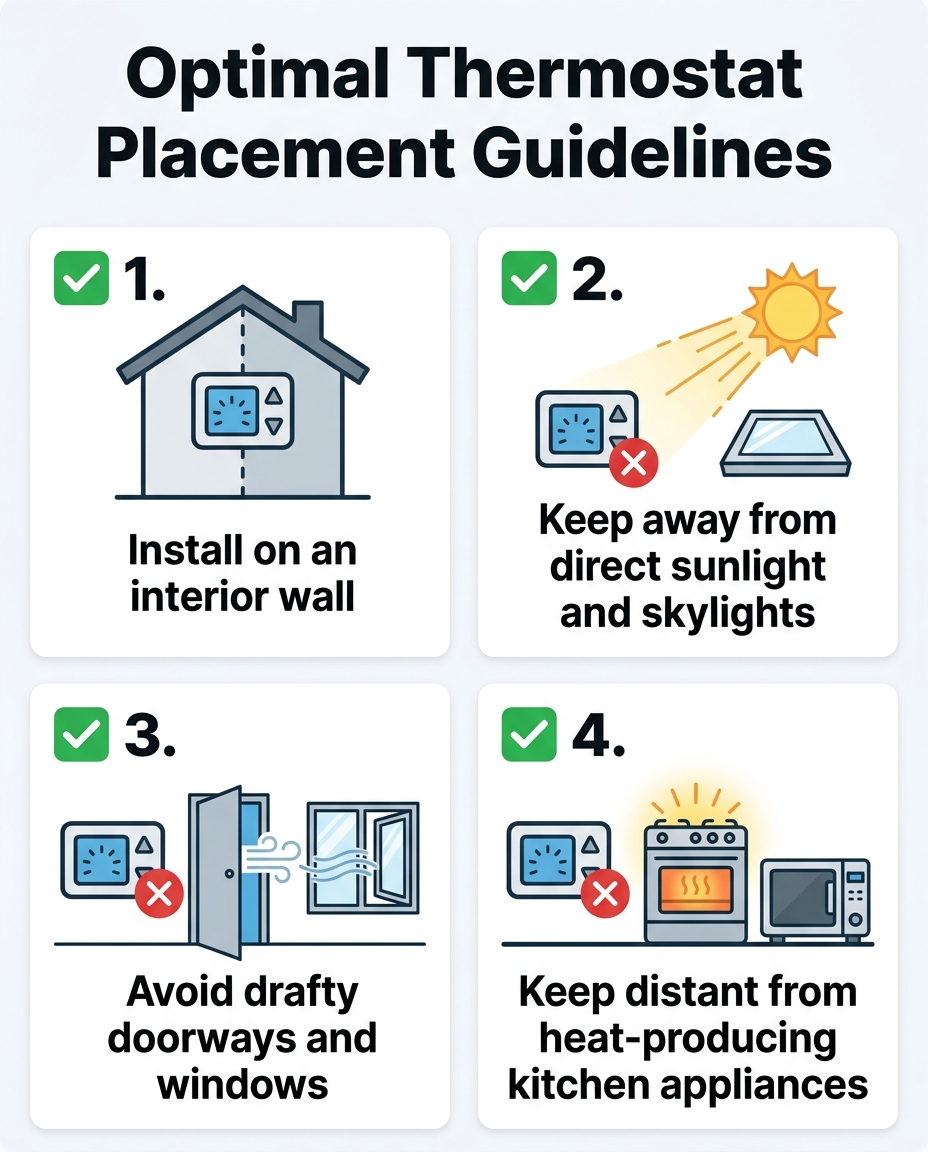
A thermostat needs to measure the natural ambient air of the home. If it is influenced by outside weather or indoor appliances, it fails its primary job. Here is a breakdown of how professionals choose the perfect location:
• Interior walls are mandatory: Exterior walls fluctuate in temperature based on the weather outside. A thermostat on an exterior wall will read artificially cold in the winter, causing the furnace to run nonstop.
• Avoid supply register drafts: If a heating vent blows directly onto the thermostat, the sensor will satisfy immediately and shut the system down, leaving the rest of the house freezing.
• Stay away from return vent pulls: While you want the thermostat relatively close to a central return, placing it directly next to the suction zone can cause erratic readings as different air currents pass over the sensor.
• Steer clear of the kitchen: As discussed, the heat from ovens, stoves, and dishwashers makes the kitchen the worst possible place for a home temperature sensor.
The ideal spot is usually a temperature-neutral interior wall in a frequently used central hallway or the main living room. This location gives the sensor the most accurate representation of the air you are actually living in. Furthermore, relocating the device is often the perfect time to consider upgrading to a smart thermostat. Modern devices offer advanced temperature averaging and remote room sensors, which can further eliminate cold spots during the early fall pre-heating season.

Once homeowners realize their thermostat is in the wrong spot, the temptation to move it themselves often sets in. It seems simple enough—unscrew the faceplate, pull the wires, and move it to the next wall. However, relocating a thermostat is not like hanging a picture frame. It involves routing delicate low-voltage control wires through the hidden infrastructure of your home.
The hidden dangers of wall fishing: Moving the device requires running new thermostat wire (often an 18/5 or 18/8 gauge wire) from the furnace control board all the way up through the floors and inside the walls to the new location. This process, known as "wall fishing," requires specialized drill bits, fiberglass rods, and a deep understanding of your home's framing. One wrong move can result in drilling into electrical lines, plumbing pipes, or structural supports.
Furthermore, the wiring itself is highly sensitive. The wires carry 24-volt electricity from the furnace transformer. If the red power wire (R) accidentally touches the common wire (C) or the metal casing of the furnace during the move, it will instantly blow the low-voltage fuse on the furnace control board. Suddenly, a DIY project to fix a cold bedroom in West Haven UT turns into a completely dead heating system.
A licensed professional handles this process safely. They fish the wires without damaging drywall unnecessarily, ensure the correct gauge is used for the distance, and most importantly, seal the hole behind the new thermostat. If the hole in the drywall is left unsealed, drafts from inside the wall cavity can blow across the back of the device, creating a brand new set of ghost readings. Hiring an expert ensures the system communicates flawlessly with its new, optimal location.
The difference between a frustrating winter and a comfortable one comes down to the quality of the diagnostic process. When you call a professional because your home is heating unevenly, you deserve more than a quick glance at the basement unit. A comprehensive diagnostic visit evaluates the entire home environment, not just the mechanical box.
Working with a team dedicated to honest, customer-first diagnostics means you get a technician who acts like a detective. They will walk your home, measure the airflow at the farthest registers, check the static pressure in the ductwork, and critically evaluate the location of your thermostat. Emphasizing this root-cause approach saves you from being unnecessarily pushed into an expensive furnace replacement when a simple environmental adjustment will solve the problem.
During the early fall pre-heating season, this level of thoroughness is crucial. Finding the true root cause—like a poorly placed thermostat being spoofed by a sunny window or a hot kitchen—protects your budget. It ensures that the money you spend actually fixes the comfort issue. If you are tired of dealing with severe temperature swings, scheduling heating diagnostics in Ogden or your local area now will give you peace of mind before the severe cold weather arrives.
The best place to put a thermostat is on an interior wall in a central, frequently used area like a main hallway or living room. It should be located roughly 52 to 60 inches above the floor to measure the natural average temperature of the room. You must keep it away from direct sunlight, drafty exterior doors, supply vents, and heat-producing appliances to ensure the sensor reads the true ambient air of the home.
Yes, a malfunctioning or poorly placed thermostat is one of the leading causes of uneven heating. If the sensor is located in a naturally warmer area, it will misread the home's average temperature and shut off the furnace prematurely. This leaves distant rooms, like bedrooms or additions, feeling incredibly cold while the area near the thermostat stays warm.
A single cold room is often due to the thermostat being located in a naturally warmer zone, causing the system to short-cycle before heat reaches the far ends of the house. Other common culprits include unbalanced ductwork, closed air registers, or poor insulation in that specific room. A professional diagnostic can determine if the issue is environmental spoofing or a mechanical airflow restriction.
Relocating a thermostat to a temperature-neutral zone absolutely helps with heating efficiency and comfort. By moving it away from false heat sources like kitchens or sunny windows, you ensure the heating system runs long enough to push warm air throughout the entire house evenly. This simple environmental fix often resolves cold spots without requiring any changes to the actual furnace.
A professional diagnostic evaluation is the only way to definitively test the mechanical health of your furnace versus the accuracy of your environmental sensors. If your furnace is making strange noises, struggling to blow air, or constantly breaking down, it may be failing. However, if the unit runs quietly and produces hot air but simply shuts off too soon, the thermostat location is likely the true root cause.
Discovering that your back bedrooms are freezing while your kitchen is sweltering is incredibly frustrating, but it does not automatically mean your heating system is at the end of its life. Understanding why moving your thermostat can fix uneven heating better than a new furnace gives you the power to make smart, cost-effective decisions for your home. Environmental factors spoofing your temperature readings are a common, highly solvable issue during the early fall pre-heating season.
You deserve the peace of mind that comes from a proper, honest diagnostic evaluation. Before the severe winter weather sets in, have your system's mechanical health and your thermostat's placement evaluated by a local expert. Fixing the root cause today ensures your entire home stays evenly comfortable all season long.
Our customers commend our outstanding service and competitive pricing, valuing the personalized attention and expert advice that make us their preferred HVAC provider.

AC failed this past spring. I received 5 bids from big comany’s to small local companies. I decided to go with Luna because of their price and support. For the money I felt Luna gave me the best equipment. Jamie was awesome. He came to my home and answered all my questions then gave me several options to choose from. The install went exactly as planned with no extra cost. Thank you Luna.
Absolutely amazing company! Very polite. I needed help in the middle of the winter with a furnace issue and they quickly fixed my heat so I asked for a bid for a complete replacement. They did a complete replacement in one day and I couldn’t be happier.I highly recommend anyone in need of any heating and air conditioning problems to call them.
I've had many interactions with Jaime, and they are all positive. Each time he was at my home within a couple of hours or less. Very knowledgeable, very pleasant and personable and a huge bonus that he offers a discount for military veterans. I would never hesitate to call again in a time of need. He's so reliable in a world of no shows in business. I highly recommend his company for any of your HVAC needs
Fast, honest, and trustworthy. Jaime was fantastic to work with. He gave us great feedback and was the best price of the 3 companies we got quotes from. I got his number from a neighbor who also had a great experience with him and recommended him highly to me.
We're super happy with Jaime's work. He is honest and straightforward, does a good job, and gets there significantly faster than the big chain businesses do. We'll keep going back to him for tune-ups and any other needs in the future.
Needed furnace blower motor replaced next day service. Jaime and his son took care of issue quickly and efficiently. Would definitely recommend will use again and again. Had water heater and ac capacitor replaced in past. Same great service and prices
Jaime was great to work with and did a fantastic job installing our heater and air conditioning. He is responsive and helpful, all for an unbeatable price. The installation is clean and professional, and our unit has worked great through some cold nights
My system came with a ten year parts and labor warranty. I had an issue with my new system condensation tune leaking. Luna Heating and Air came out ASAP and took care of the problem. Excellent customer service. Will always recommend.
Jaime is fantastic. I built a second home and had him do the HVAC work. Since then I've had him do some other repairs on my primary home . Great sense of humor. Professional, fair and very responsive. Highly recommend him.
Jaime did the entire HVAC system on my new home. He did a great job and came in at a great price. He is very responsive and easy to work with. I would reccomend him anyday.
As a consumer, I feel like I have to choose between a price OR quality work. Luna does BOTH - quality and at a fair price. My experience is that that is so rare - I had to provide feedback of excellent service 5 stars and will always recommend and call Luna for future services.


Get flexible financing for your Luna Heating & Air upgrade with Optimus. Apply today and see how easy and affordable it is to bring year-round comfort to your home.