5 min read
Common Homeowner Questions Answered: Why Your Furnace Smells Like Burning Dust
Why does your heater smell like burning dust? Get common homeowner questions answered to see if it's normal or a hazard. Decide with confidence.

.avif)
Why does your heater smell like burning dust? Get common homeowner questions answered to see if it's normal or a hazard. Decide with confidence.
You finally switch your thermostat to heat, anticipating cozy warmth, but instead, you are hit with a harsh, burning odor. Getting common homeowner questions answered is critical when dealing with unexpected heating issues, especially when you are trying to figure out if your system is safe to run or if you need immediate help.
For professional HVAC services or to schedule an air conditioning installation before the seasons change again, the Luna Heating & Air Conditioning team is ready to help.
That initial moment of panic is something our technicians hear about nearly every day during the first cold October evening of the year. You wait months to turn on your furnace, and within minutes of the blower motor kicking on, the entire house smells like something is on fire. The transition from the summer cooling season to the fall heating season often brings this unsettling surprise.
The core decision you face in this moment is distinguishing between a normal, harmless operational quirk and a hazardous mechanical issue. Normal dust burn-off is a standard part of starting up a dormant heating system. However, knowing exactly what to look for—and what to smell for—empowers you to make the right call for your home without unnecessary anxiety. By understanding the physical mechanics of your furnace, you can confidently evaluate the situation and know exactly when it is time to shut the system down.
To understand why your furnace produces that distinct odor, we have to look at what happens inside the metal cabinet during the off-season. In our experience, the smell is not a random malfunction; it is a predictable physical reaction caused by months of inactivity.
The heart of your furnace is a component called the heat exchanger. This is a series of metal tubes or coils that separate the breathable air in your home from the toxic combustion gases created by burning fuel. When your furnace turns on, the burners heat this metal shield to extremely high temperatures. The blower motor then pushes your indoor air across the hot metal, warming the air before circulating it through your vents.
During the four to six months of summer dormancy, your furnace sits completely idle. Working in a climate like West Haven UT, we constantly see how the dry, hot summers lead to an increase in airborne particulate matter. Household dust, microscopic pet dander, lint, and pollen naturally circulate through your home and settle inside the dormant ductwork and the furnace cabinet.
Because the heat exchanger is a large, stationary metal surface, it acts as a collection area for all of these settling particles. A fine layer of organic dust builds up over the entire assembly, waiting for the heating season to begin.
The solution to this temporary problem happens automatically. When you finally turn the heat on, those burners ignite, and the heat exchanger rapidly climbs to hundreds of degrees. The thin layer of settled dust cannot withstand that heat and instantly incinerates. The resulting smoke and odor are immediately picked up by your blower motor and pushed through your supply vents. This is the exact reason why we tell our customers that the first heating cycle of the year always smells like dry, singed dust.
Knowing that the smell is normal is only half the battle; knowing how long it should stick around is what truly provides peace of mind. Our team typically sees normal dust burn-off follow a very specific and predictable timeline.
Under normal circumstances, the burning dust odor should completely dissipate within 30 to 60 minutes of the first continuous heating cycle. The smell will be most intense during the first ten minutes as the bulk of the accumulated debris burns away. After that initial spike, you should notice a steady, noticeable decrease in the intensity of the odor.
If you are starting your furnace on that first cold October evening, we recommend taking a few simple steps to clear the air faster:
• Ventilate the space: Open a few windows on opposite sides of the house to create a cross-breeze.
• Use exhaust fans: Turn on your kitchen and bathroom exhaust fans to help pull the stale, odorous air out of the living areas.
• Keep the system running: Do not turn the furnace off and on repeatedly. Let it run a full, continuous cycle so the heat exchanger can completely burn off the residue.
If the burning smell persists beyond a few hours, or if it completely goes away but returns on subsequent days, it is no longer considered normal startup burn-off. A returning odor indicates that new debris is being introduced to the heat exchanger, or that a component is continuously overheating. At this point, the normal timeline has expired, and the system requires professional attention.
While a dry, dusty smell is harmless, other odors indicate serious mechanical or electrical failures. We often remind our West Haven UT customers that your nose is your first diagnostic tool for catching a dangerous furnace issue.
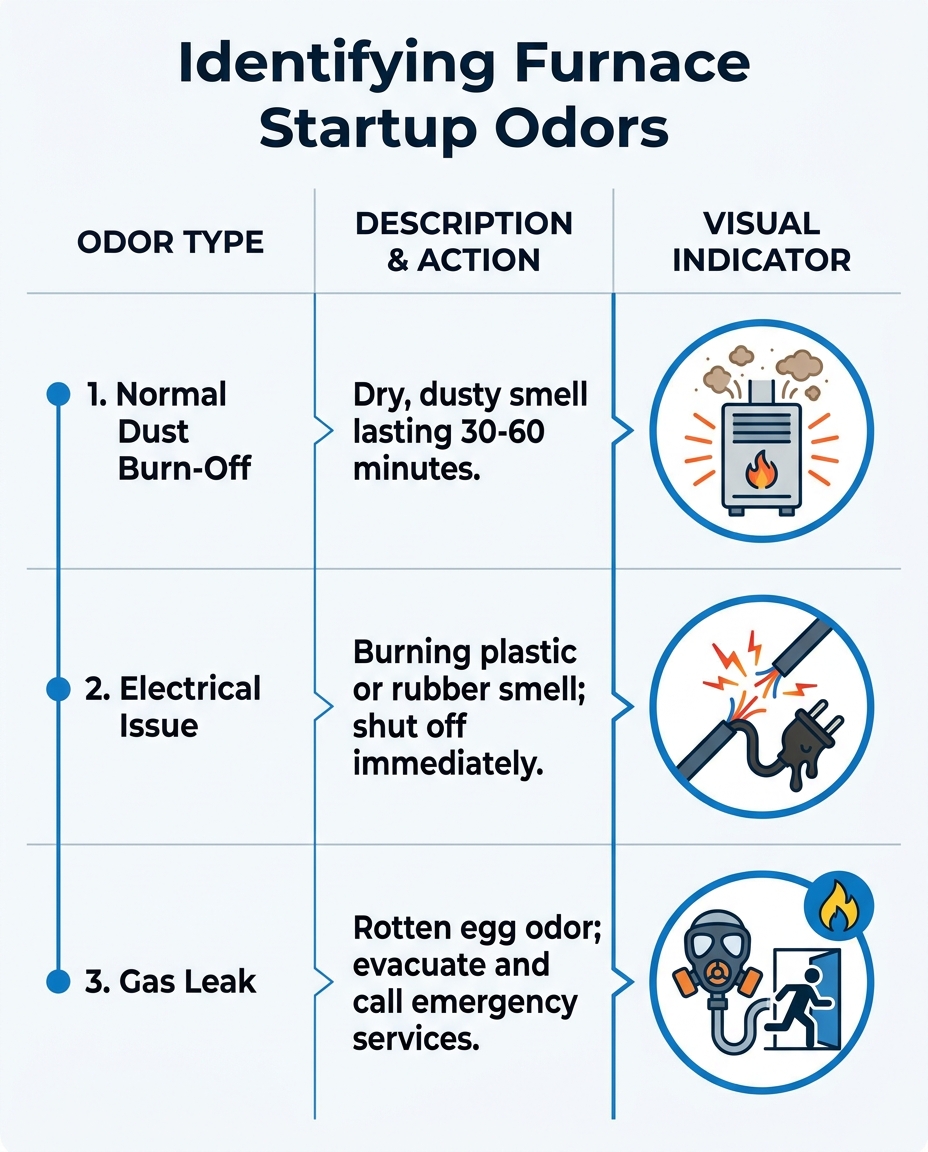
Here is a breakdown of the specific scents our technicians frequently encounter and what they mean for your safety:
• Normal Burn-Off — What It Smells Like: Dry, singed dust, similar to a hot clothes iron or a space heater. — Likely Cause: Dust incinerating on the heat exchanger after summer dormancy. — Required Action: Monitor for 30-60 minutes; ventilate the home.
• Electrical Failure — What It Smells Like: Burning plastic, melting rubber, or a sharp chemical scent. — Likely Cause: Melting wire casings, a failing capacitor, or an overheating circuit board. — Required Action: Shut down system immediately at the thermostat and breaker; call a professional.
• Mechanical Friction — What It Smells Like: Acrid, metallic, or an ozone-like smell. — Likely Cause: An overheating blower motor, a seized bearing, or a slipping belt. — Required Action: Shut down system immediately; schedule an inspection.
• Gas Leak — What It Smells Like: Rotten eggs or sulfur. — Likely Cause: A leak in the natural gas supply line or a malfunctioning gas valve. — Required Action: Evacuate the home immediately, leave doors open, and call emergency services.
The quick fix for safety: If you ever detect the smell of burning plastic, rubber, or rotten eggs, do not wait to see if it goes away. Walk to your thermostat, switch the system to "Off," and if you suspect an electrical issue, flip the dedicated furnace switch on your main breaker panel.

While you cannot completely prevent the initial dust burn-off, you can take preventative measures to minimize the smell and ensure your system starts safely on that first cold October evening. Preparing your furnace properly reduces strain on the equipment and improves your indoor air quality.
• Change the air filter immediately: This is the single most important step we recommend. A clogged filter restricts airflow, causing the system to run hotter and push more dust across the heat exchanger. Always start the heating season with a fresh, high-quality pleated filter.
• Clear the surrounding area: During the summer, it is common to store boxes, cleaning supplies, or luggage near the furnace. Ensure there is a clear, three-foot perimeter around the unit. Keep all combustible materials far away from the combustion chamber.
• Open all room vents: Walk through your home and ensure all supply registers and return grilles are open and unobstructed by furniture or rugs. Closing vents in unused rooms creates dangerous backpressure that can overheat the system.
• Test your carbon monoxide detectors: Before the heating season begins, press the test button on all CO detectors in your home and replace the batteries if necessary.
• Leave internal cleaning to the experts: Never attempt to open the sealed furnace cabinet to vacuum the heat exchanger or blower assembly yourself. Accessing these internal components requires specialized tools and training, and disrupting the burners or gas valves can create severe safety hazards.
Even with proper preparation, heating systems experience wear and tear. Establishing when expert intervention is necessary protects your home from sudden breakdowns and dangerous malfunctions.
You should schedule a professional inspection if your furnace exhibits persistent burning smells beyond the first day, unusual grinding or squealing noises, or if the system is short-cycling (turning on and off rapidly without heating the home). A comprehensive fall maintenance check is the best defense against unexpected overnight breakdowns.
Just last winter, our team responded to a local homeowner who experienced a situation where part of their furnace unexpectedly died overnight during a winter freeze. A Luna Heating & Air Conditioning technician came out the same day to diagnose and replace the failing component, getting the system back online quickly while providing helpful advice for future upkeep. This level of responsive, professional service is crucial when parts fail unexpectedly during the coldest parts of the year in West Haven UT.
During a professional tune-up, our technicians do much more than just change a filter. They meticulously inspect the heat exchanger for microscopic cracks. A cracked heat exchanger is incredibly dangerous because it allows carbon monoxide to leak into your breathing air. Our commitment is to provide honest, customer-friendly assessments—focusing on high-quality professional standards rather than fear-mongering. If you need comprehensive HVAC solutions, having a trusted expert evaluate your system ensures it operates safely all season long.
Sometimes, recurring odors, frequent mechanical breakdowns, or simply advancing age indicate that a system is reaching the end of its usable lifespan. If your furnace is over 15 years old and constantly struggling to maintain temperature, repairing it may no longer be the most cost-effective choice.
Replacing a failing furnace is often an ideal time to evaluate your home's overall climate control strategy. Because the heating and cooling systems share the same ductwork and blower motor, upgrading your furnace presents a perfect opportunity to evaluate your future cooling needs as well. Modern, high-efficiency systems offer significantly better indoor air quality, quieter operation, and far fewer startup issues than older models. Additionally, generally applicable energy rebates and federal tax credits may apply to qualifying high-efficiency installations, making it an excellent time to upgrade.
Upgrading your home comfort is made accessible through professional guidance and various payment structures. Whether you are exploring flexible financing options or looking for a comprehensive guide to professional AC installation, planning ahead ensures you are never left shivering in the middle of a West Haven UT winter.
It is typically the incineration of dust that has settled on the heat exchanger during the summer. Over the months your system sits idle, household dust, pet dander, and lint accumulate inside the unit. When the burners ignite for the first time, that debris burns off instantly, creating a dry, dusty odor that travels through your vents.
The smell should noticeably dissipate within 30 to 60 minutes of the first continuous heating cycle. You will notice the odor is strongest during the first ten minutes. If you open a few windows to ventilate the house on that first cold October evening, the smell will clear out even faster.
Yes, if it is a dry dust smell during the first use of the season; no, if it smells like electrical plastic, rubber, or rotten eggs. A brief dust smell is a normal physical reaction to startup. However, if you smell melting wires or sulfur, you must shut the system down immediately and contact a professional.
A cracked heat exchanger often produces a strong, unpleasant exhaust odor similar to formaldehyde, and carries the invisible risk of carbon monoxide. Unlike the temporary smell of burning dust, this chemical exhaust smell will persist every time the furnace runs. Because carbon monoxide is odorless and deadly, any persistent exhaust smell requires immediate professional evaluation.
Yes, opening windows for 10 to 15 minutes can help clear the harmless dust burn-off odors from your home more quickly. Creating a cross-breeze or running your kitchen exhaust fan helps pull the stale air out of your living spaces, making that initial heating cycle much more comfortable for your family.
Experiencing a brief burning dust smell is a completely normal part of welcoming the fall season. As the temperatures drop in West Haven UT, your heating system is simply clearing out the cobwebs of summer dormancy. You can enjoy genuine peace of mind by knowing the distinct differences between harmless dust burn-off and a real mechanical problem.
By changing your filters, keeping the area clear, and listening to your system, you set your home up for a warm, comfortable winter. If you ever have lingering doubts about your system's safety, performance, or persistent odors, reaching out to the experts at Luna Heating & Air Conditioning ensures you get the clear, reassuring explanation and professional care you need.
Our customers commend our outstanding service and competitive pricing, valuing the personalized attention and expert advice that make us their preferred HVAC provider.

AC failed this past spring. I received 5 bids from big comany’s to small local companies. I decided to go with Luna because of their price and support. For the money I felt Luna gave me the best equipment. Jamie was awesome. He came to my home and answered all my questions then gave me several options to choose from. The install went exactly as planned with no extra cost. Thank you Luna.
Absolutely amazing company! Very polite. I needed help in the middle of the winter with a furnace issue and they quickly fixed my heat so I asked for a bid for a complete replacement. They did a complete replacement in one day and I couldn’t be happier.I highly recommend anyone in need of any heating and air conditioning problems to call them.
I've had many interactions with Jaime, and they are all positive. Each time he was at my home within a couple of hours or less. Very knowledgeable, very pleasant and personable and a huge bonus that he offers a discount for military veterans. I would never hesitate to call again in a time of need. He's so reliable in a world of no shows in business. I highly recommend his company for any of your HVAC needs
Fast, honest, and trustworthy. Jaime was fantastic to work with. He gave us great feedback and was the best price of the 3 companies we got quotes from. I got his number from a neighbor who also had a great experience with him and recommended him highly to me.
We're super happy with Jaime's work. He is honest and straightforward, does a good job, and gets there significantly faster than the big chain businesses do. We'll keep going back to him for tune-ups and any other needs in the future.
Needed furnace blower motor replaced next day service. Jaime and his son took care of issue quickly and efficiently. Would definitely recommend will use again and again. Had water heater and ac capacitor replaced in past. Same great service and prices
Jaime was great to work with and did a fantastic job installing our heater and air conditioning. He is responsive and helpful, all for an unbeatable price. The installation is clean and professional, and our unit has worked great through some cold nights
My system came with a ten year parts and labor warranty. I had an issue with my new system condensation tune leaking. Luna Heating and Air came out ASAP and took care of the problem. Excellent customer service. Will always recommend.
Jaime is fantastic. I built a second home and had him do the HVAC work. Since then I've had him do some other repairs on my primary home . Great sense of humor. Professional, fair and very responsive. Highly recommend him.
Jaime did the entire HVAC system on my new home. He did a great job and came in at a great price. He is very responsive and easy to work with. I would reccomend him anyday.
As a consumer, I feel like I have to choose between a price OR quality work. Luna does BOTH - quality and at a fair price. My experience is that that is so rare - I had to provide feedback of excellent service 5 stars and will always recommend and call Luna for future services.


Get flexible financing for your Luna Heating & Air upgrade with Optimus. Apply today and see how easy and affordable it is to bring year-round comfort to your home.