5 min read
What to Check Before Turning on Heat: A Pre-Winter Furnace Checklist
Before the November freeze hits, knowing what to check before turning on heat prevents breakdowns. See why we prioritize these specific safety steps first.


Before the November freeze hits, knowing what to check before turning on heat prevents breakdowns. See why we prioritize these specific safety steps first.
At Luna Heating & Air Conditioning, we know that with the November first freeze rapidly approaching West Haven, knowing exactly what to check before turning on heat is the most important step you can take for your home this season. The transition from late autumn to freezing winter weather happens quickly, and that sudden drop in temperature leaves very little margin for error if your heating system fails upon startup. After sitting dormant for months, your heating equipment needs a careful, deliberate transition to ensure it operates safely and efficiently when you need it most.
Whether you are relying on older furnace systems or a newly installed setup, taking the right preparatory steps prevents unexpected breakdowns and protects your household. Many homeowners simply flip the switch on the first cold morning, crossing their fingers and hoping for warm air. This approach is risky. A dormant system can hide a variety of issues—from simple dust buildup to critical component failures—that only reveal themselves when the unit is forced to run at full capacity.
This guide establishes the clear boundary between the safe, practical checks you can perform yourself and the hazardous diagnostic work that requires specialized training. By following a structured approach to your pre-winter preparation, you can confidently transition your home into the colder months, knowing your system is ready to handle the heavy workload ahead.
In our years of keeping West Haven warm, our team typically sees that waiting until the house is already freezing to test your heating equipment is a gamble that often results in uncomfortable, and sometimes dangerous, situations. When you understand the physical toll that winter weather takes on your HVAC system, the value of early preparation becomes undeniable. Scheduling a professional HVAC tune-up before the temperatures plummet ensures that any underlying issues are resolved long before they can cause a system failure.
Severe System Strain: Heating systems face immense mechanical stress when operating at peak capacity during harsh winters. Metal components expand and contract, belts and motors require proper lubrication, and electrical connections must handle sustained loads. A neglected system forced to turn on and immediately run at maximum output is highly susceptible to cracked components, blown fuses, and seized motors.
Life-Safety Hazards: Ignoring professional inspections carries significant risks beyond just a cold house. According to the CDC, carbon monoxide poisoning risks peak during the winter months, largely due to uninspected gas heating systems. A compromised heat exchanger or a blocked flue pipe can allow odorless, colorless exhaust gases to leak directly into your living space. Early testing and professional oversight are the only ways to mitigate this life-safety hazard.
Peak Season Delays: When the November first freeze hits, HVAC companies experience their highest call volumes of the year. Our dispatchers at Luna Heating & Air Conditioning see this rush every fall. If your system breaks down on the first cold night, you will likely find yourself competing with hundreds of other homeowners for emergency service. Testing your system weeks in advance allows you to identify and fix problems on your own schedule, avoiding the stress and discomfort of waiting for a technician in a freezing house.
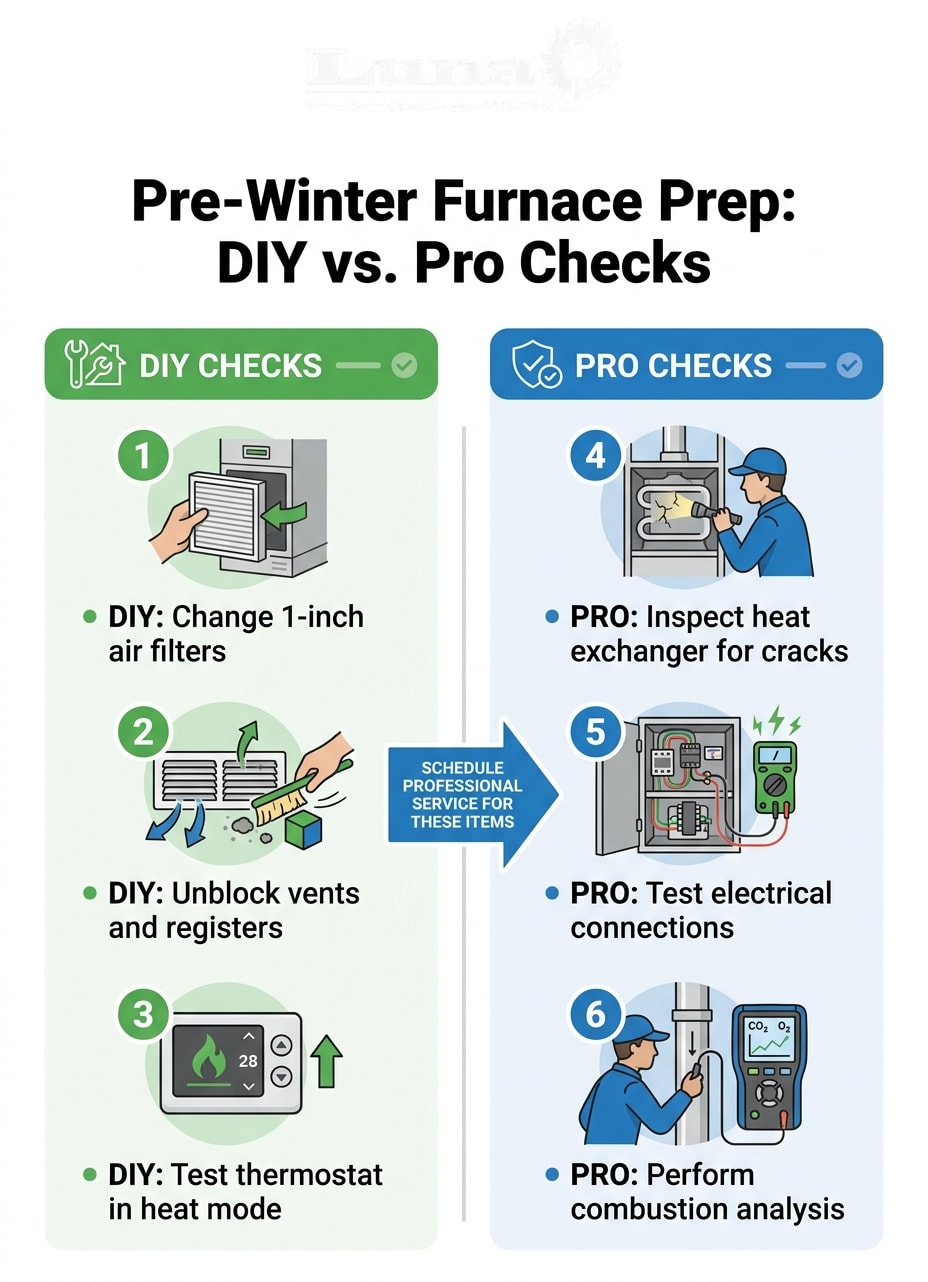
Before you even touch the thermostat, there are several safe, straightforward tasks you should complete around the house. These steps require no special tools and are entirely safe for a homeowner to perform. Completing this checklist ensures that when you finally initiate the thermostat switch to heat mode, your system has the airflow and clearance it needs to operate correctly. This is the foundation of routine HVAC maintenance that every homeowner should master.
The single most important DIY task is checking your air filter. According to the U.S. Department of Energy, a dirty, clogged filter is a leading cause of HVAC system failure and severely reduces efficiency. When a filter is blocked, the blower motor has to work twice as hard to pull air through the system, which can cause the furnace to overheat and shut down prematurely.
• Locate the compartment: Find the filter slot, which is usually located where the return duct meets the furnace cabinet.
• Check the condition: Slide the filter out and hold it up to a light source. If you cannot see light passing through the material, it is time for a replacement.
• Replace appropriately: Swap out standard 1-inch filters if they appear gray, dusty, or clogged. Always ensure the arrows on the new filter frame point toward the furnace (the direction of airflow).
Your heating system relies on a carefully balanced flow of air throughout the house. If return or supply vents are blocked, the system experiences increased static pressure, which strains the blower and creates uncomfortable cold spots in your home.
• Walk the perimeter: Go through every room in your house to verify that all supply registers and return grilles are fully open.
• Remove seasonal obstructions: Over the summer, it is easy to accidentally place furniture, heavy rugs, or storage bins over floor vents. Move these items at least two feet away to ensure proper airflow balance.
• Check the return grilles: Wipe down the large return grilles with a microfiber cloth to remove accumulated dust and pet hair that could restrict air from pulling back into the system.
The physical space surrounding your indoor heating unit must remain clear for both safety and operational reasons. Furnaces require adequate ambient air for proper combustion and ventilation.
• Enforce the three-foot rule: Keep a minimum clearance of three feet around the entire furnace cabinet.
• Remove flammables: Ensure no cleaning supplies, paint cans, paper products, or cardboard boxes are stored near the unit, as these pose a severe fire hazard when the system heats up.
Once your filters are clean and your vents are clear, it is time to test the system. The initial startup is a critical observation period. You are not just turning the system on; you are actively monitoring how it behaves after months of inactivity. Understanding the reasons to prioritize heating system maintenance becomes very clear during this first test run.
1. Set the baseline: Note the current indoor temperature displayed on your thermostat. Ensure the house is relatively quiet so you can hear the system engage.
2. Make the transition: Perform the thermostat switch to heat mode. Adjust the temperature setting so it is roughly three to five degrees higher than the current room temperature. This forces the system to call for heat immediately.
3. Listen to the ignition sequence: Stand near a vent or close to the furnace room. You should hear a click from the thermostat, followed by the inducer motor starting, the ignition of the burners (a soft whoosh for gas furnaces), and finally, the blower motor pushing air through the ducts.
4. Evaluate the smells: It is entirely normal to notice a faint smell of burning dust during the first 15 to 30 minutes of operation. This is simply the dust that settled on the heat exchanger over the summer burning off. However, if you smell raw gas, rotten eggs, or melting plastic/electrical wire, shut the system down immediately at the thermostat and call a professional.
5. Monitor the full cycle: Allow the system to run until it reaches the target temperature you set. Verify that warm air is blowing consistently from the vents and that the system automatically shuts off once the house is properly heated.
While clearing vents and changing filters are excellent homeowner habits, there is a strict boundary you must not cross. Modern heating systems operate using high-voltage electricity, combustible gases, and complex pressure switches. Attempting to diagnose or clean internal components without a license is incredibly dangerous. As West Haven's safety-first local authority, our technicians at Luna Heating & Air Conditioning emphasize that true peace of mind comes from knowing a qualified expert has verified the integrity of your life-safety components before the November first freeze.
• Cracked Heat Exchanger — Underlying Cause: Repeated expansion and contraction over years of use can cause microscopic fractures in the metal, allowing carbon monoxide to escape into the airstream. — Professional Solution: A licensed technician uses specialized combustion analyzers and visual inspection cameras to detect hairline cracks that are invisible to the naked eye.
• Electrical Component Failure — Underlying Cause: High-voltage capacitors, contactors, and control boards can degrade, leading to short circuits or electrical fires if handled improperly. — Professional Solution: Professionals use multimeters to test voltage and amperage draws, safely replacing compromised wiring without risking electrocution or system damage.
• Gas Line and Valve Leaks — Underlying Cause: Vibrations and age can loosen gas connections or cause the main gas valve to stick, creating a severe fire or explosion hazard. — Professional Solution: Technicians perform rigorous pressure tests and electronic leak detection to ensure the gas delivery system is perfectly sealed and calibrated.
Never open the furnace cabinet to tinker with wiring, adjust the burners, or clean the flame sensor yourself. These tasks require exact calibrations and specialized tools to ensure the system operates safely throughout the winter.
Even with careful preparation, hardware can occasionally fail. Knowing what a struggling system looks and sounds like allows you to act before a minor issue becomes a total breakdown. When the harsh local freezing winter nights arrive, an unexpected failure can drop the temperature inside your home to dangerous levels within just a few hours.
During your initial test cycle, pay close attention to how the system behaves. If the furnace turns on for just a minute or two and then shuts off before the house is warm, it is "short cycling." This usually indicates an overheating issue, a failing flame sensor, or a severely restricted airflow problem. Similarly, if you hear loud grinding, screeching, or banging noises coming from the cabinet, a mechanical component like the blower motor bearings may be failing.
We recently helped a West Haven homeowner who experienced this firsthand during a bitter winter stretch when a critical part on their furnace unexpectedly failed overnight. Because they recognized the warning signs and sought our heating repair services promptly, a Luna Heating & Air Conditioning technician was dispatched the same day to fix the issue. Our technician provided professional advice on the system's overall health, and the furnace was repaired rapidly before the house lost its residual warmth.
Persistent cold spots in the home, a yellow burner flame instead of a crisp blue one, or a system that simply refuses to respond to the thermostat are all signs that you need immediate professional intervention. Ignoring these symptoms guarantees that the system will fail entirely, likely on the coldest night of the year.
Before turning your heater on for the winter, you should replace the air filter, clear all vents of obstructions, and remove any flammable items stored near the furnace. Once the physical space is prepared, you can safely perform a test cycle. Always schedule a professional inspection to verify the internal components are safe for operation.
You should let your heater run through one complete heating cycle for the first time, which typically takes 15 to 30 minutes. Set the thermostat three to five degrees above the current room temperature and wait for the system to reach that target and shut off automatically. This confirms that both the heating elements and the thermostat communication are functioning correctly.
It is generally safe to turn on your heater after a long time, provided you have completed basic homeowner maintenance like changing the filter and checking for gas smells. However, because dust settles on the heat exchanger and components remain stagnant for months, you should monitor the initial startup closely. If you smell gas or hear loud grinding noises, shut it off immediately.
For optimal balance between comfort and energy efficiency, the Department of Energy recommends setting your thermostat to 68 degrees Fahrenheit while you are awake and at home in the winter. You can lower it by seven to ten degrees when you are asleep or away from the house to reduce unnecessary strain on the system and lower your utility usage.
Your heater smells like burning dust when first turned on because particles of dust, pet dander, and household lint settle on the heat exchanger and burners during the summer months. When the burners ignite for the first time, this layer of debris safely burns off, creating a distinct odor that should dissipate entirely within the first half hour of operation.
As local HVAC professionals, we believe preparing your home for the winter requires a balance of proactive homeowner habits and professional expertise. Knowing exactly what to check before turning on heat empowers you to handle the safe DIY tasks—like replacing filters and clearing vents—while respecting the boundary of professional diagnostics. The November first freeze in West Haven leaves no room for guesswork.
Do not wait until the first freezing night to discover your system is struggling. Complete your checklist today, perform the thermostat switch to heat mode, and monitor the results. If you have any doubts about your system's safety or performance, schedule your professional tune-up immediately before the peak winter rush begins. A clear, actionable approach to preparation ensures your heating system will start safely and reliably, keeping your household comfortable all season long.
Our customers commend our outstanding service and competitive pricing, valuing the personalized attention and expert advice that make us their preferred HVAC provider.

AC failed this past spring. I received 5 bids from big comany’s to small local companies. I decided to go with Luna because of their price and support. For the money I felt Luna gave me the best equipment. Jamie was awesome. He came to my home and answered all my questions then gave me several options to choose from. The install went exactly as planned with no extra cost. Thank you Luna.
Absolutely amazing company! Very polite. I needed help in the middle of the winter with a furnace issue and they quickly fixed my heat so I asked for a bid for a complete replacement. They did a complete replacement in one day and I couldn’t be happier.I highly recommend anyone in need of any heating and air conditioning problems to call them.
I've had many interactions with Jaime, and they are all positive. Each time he was at my home within a couple of hours or less. Very knowledgeable, very pleasant and personable and a huge bonus that he offers a discount for military veterans. I would never hesitate to call again in a time of need. He's so reliable in a world of no shows in business. I highly recommend his company for any of your HVAC needs
Fast, honest, and trustworthy. Jaime was fantastic to work with. He gave us great feedback and was the best price of the 3 companies we got quotes from. I got his number from a neighbor who also had a great experience with him and recommended him highly to me.
We're super happy with Jaime's work. He is honest and straightforward, does a good job, and gets there significantly faster than the big chain businesses do. We'll keep going back to him for tune-ups and any other needs in the future.
Needed furnace blower motor replaced next day service. Jaime and his son took care of issue quickly and efficiently. Would definitely recommend will use again and again. Had water heater and ac capacitor replaced in past. Same great service and prices
Jaime was great to work with and did a fantastic job installing our heater and air conditioning. He is responsive and helpful, all for an unbeatable price. The installation is clean and professional, and our unit has worked great through some cold nights
My system came with a ten year parts and labor warranty. I had an issue with my new system condensation tune leaking. Luna Heating and Air came out ASAP and took care of the problem. Excellent customer service. Will always recommend.
Jaime is fantastic. I built a second home and had him do the HVAC work. Since then I've had him do some other repairs on my primary home . Great sense of humor. Professional, fair and very responsive. Highly recommend him.
Jaime did the entire HVAC system on my new home. He did a great job and came in at a great price. He is very responsive and easy to work with. I would reccomend him anyday.
As a consumer, I feel like I have to choose between a price OR quality work. Luna does BOTH - quality and at a fair price. My experience is that that is so rare - I had to provide feedback of excellent service 5 stars and will always recommend and call Luna for future services.


Get flexible financing for your Luna Heating & Air upgrade with Optimus. Apply today and see how easy and affordable it is to bring year-round comfort to your home.